Retaining Walls
Different types of retaining walls:
Fieldstone Walls:
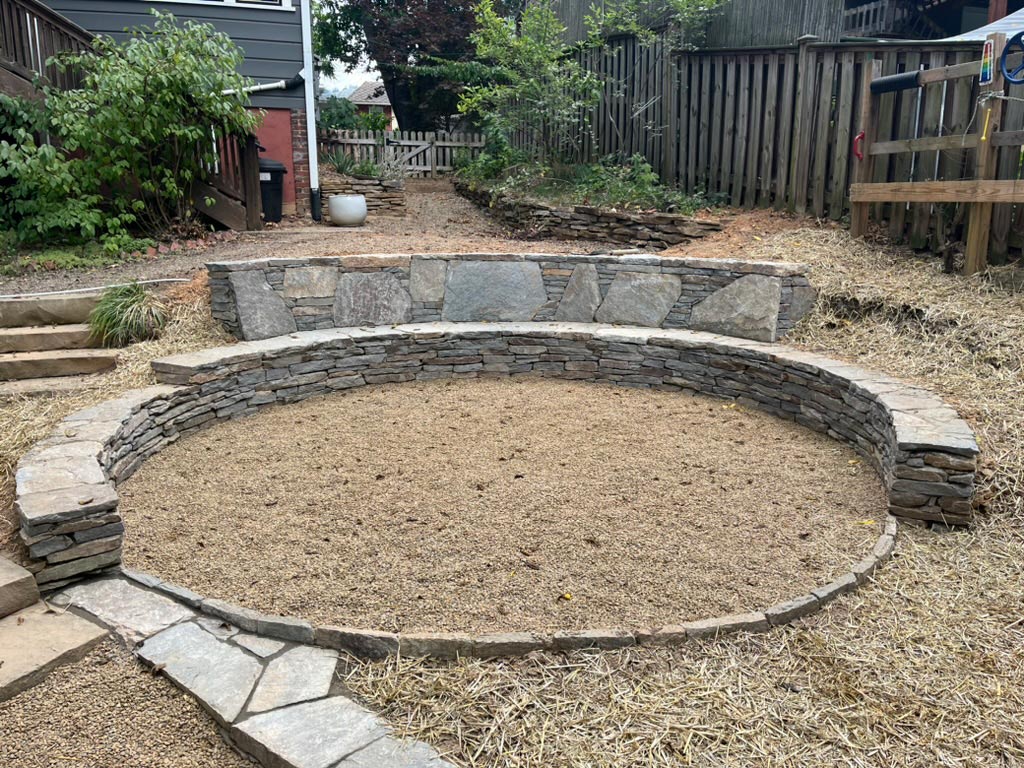
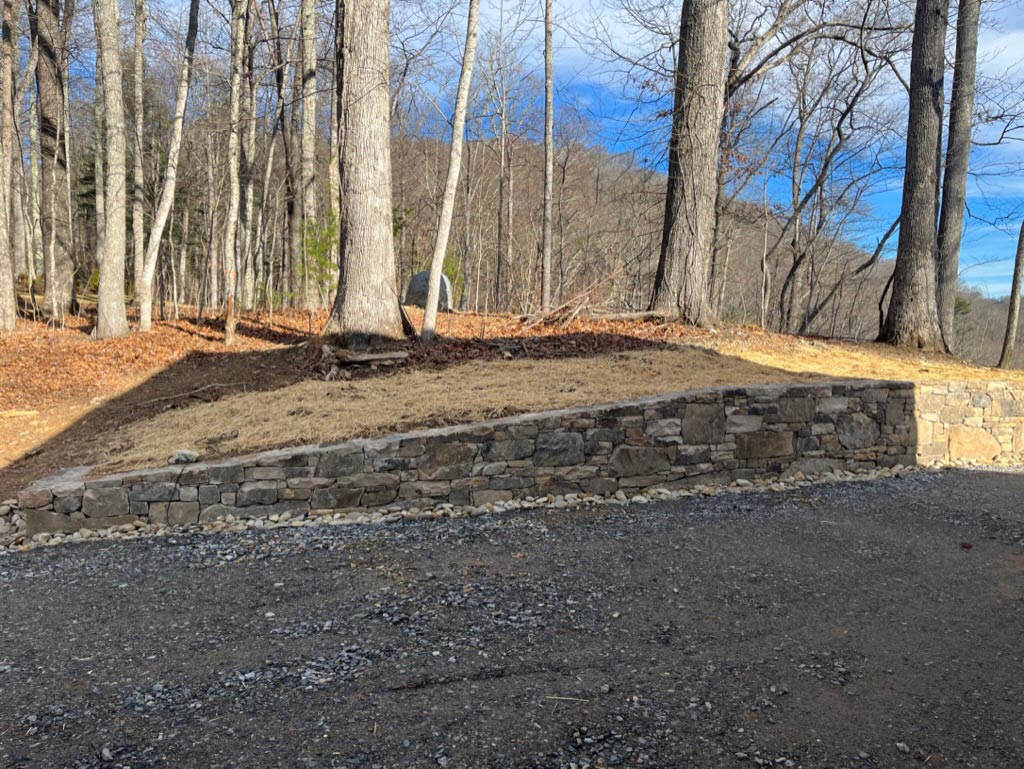
Dry stacked, mortared, and dry-stacked mortared fieldstone is one type of retaining wall. This type of wall can be installed on a compacted gravel footer or a traditional concrete footer depending on the location, length, and height. Any type of sandstone, granite, or limestone fieldstone can be used to create this type of wall. Valley Stonescapes always installs geotextile fabric with staples before installation of the footer. All types of walls are backfilled with 3/8 or ¾ grey gravel including installation of a French Drain at the base of the wall.
Boulder Walls:
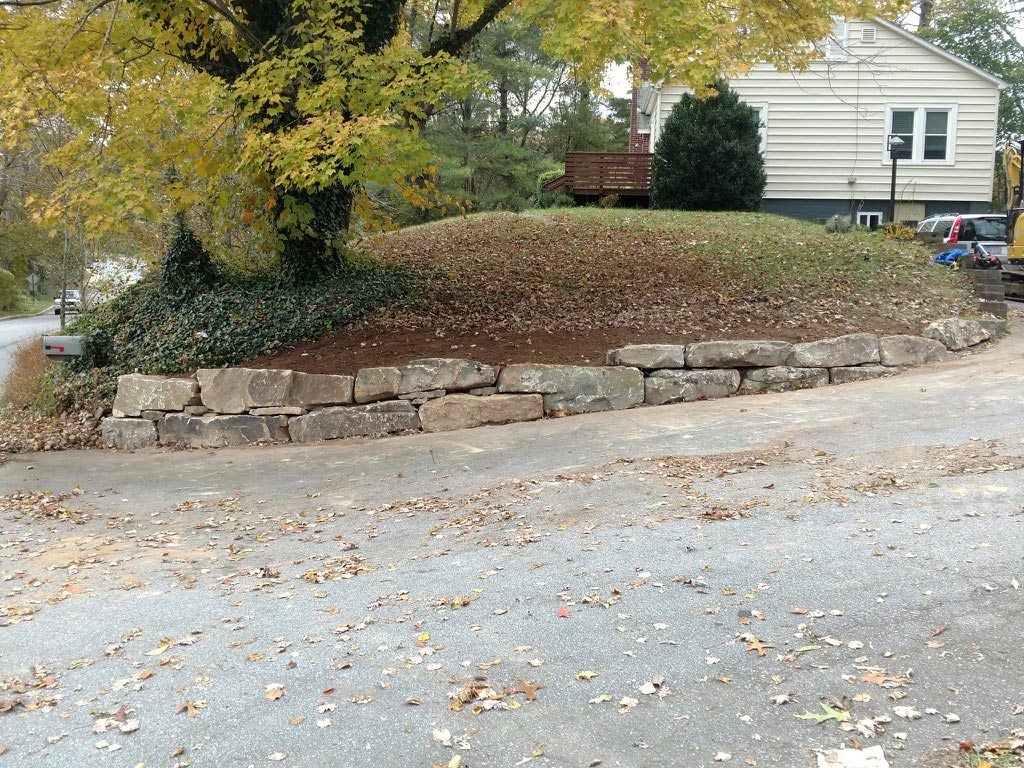
Boulder walls are another type of retaining wall that Valley Stonescapes and Masonry specializes in. Boulders are usually defined as stones too large for a person to move. We use mini excavators of varying size to move and place boulders. The site and location of the boulder retaining wall determine the size of the boulder retaining wall. Most boulder retaining walls need some type of excavation to prepare the location for installation. Boulder retaining walls can be used to retaining roads, driveways, garden spaces, and or yards.
Concrete Block Walls vs Landscape Block Walls:
Concrete Block Walls can be installed on concrete footers for heavy duty retention. These types of walls are usually used for retaining below and or above driveways, foundations, and any other type of building structure. Once the wall is complete, we can also install any type of stone veneer, and or stucco to the block if wanted by the client.
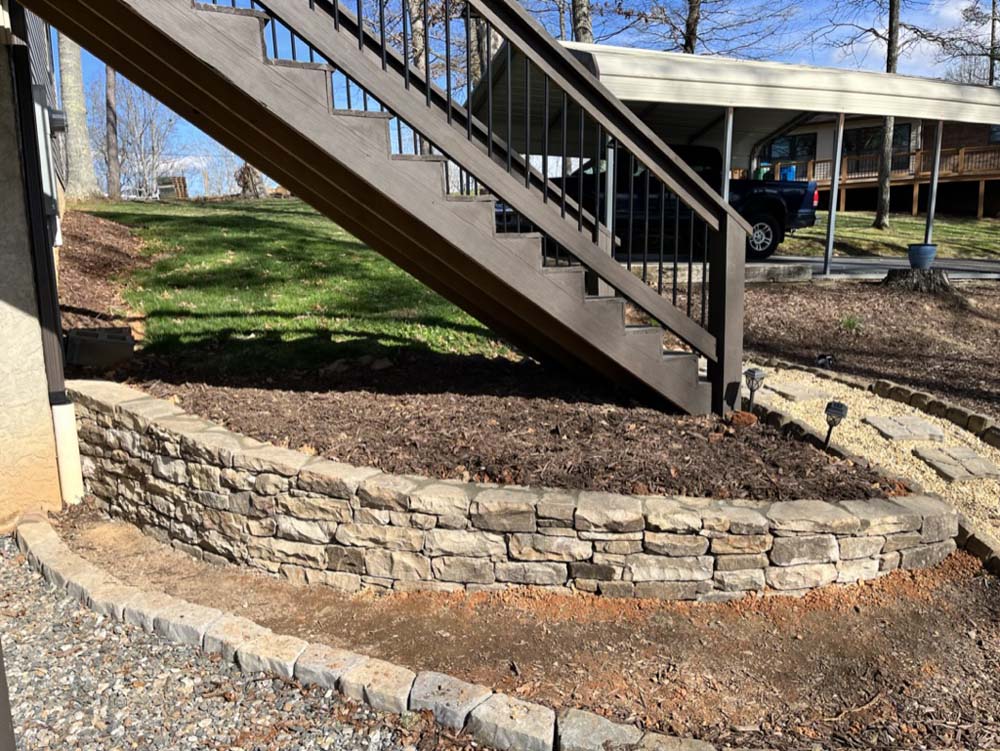
Landscape Block Retaining walls are constructed with solid or hollow concrete blocks. The blocks can come in different colors and have different textures on the front face of the block. This type of retaining wall sits on a compacted footer of 3/8 gravel. The footer cavity is wrapped in geotextile fabric which spans over the earth being retained. French Drain Systems are installed behind the wall sometimes in several different elevations depending on the height of the wall. Gravel is placed in the cells of the block as well as behind the wall. The gravel behind the wall is compacted during installation of each course. The last course of each wall is capped and back filled with soil depending on the installation.